
135g of protein, 2 fruits, 3 veggies. One real day.
People ask how I get the protein in without powder, and where the fruits and vegetables fit. Here’s the whole day from my app, screenshots included. Zero scoops involved.
My Daily Numbers
Three numbers run my food day: 135 grams of protein, 2 fruits, 3 vegetables. Hit all three and the calories mostly behave.
The protein holds muscle and keeps me full. The produce carries the fiber, the volume, and most of the color in my fridge. None of the three works as well without the other two, so this page tracks all of them through one real day, meal by meal.
I started with shakes
I have nothing against protein powder. When I first raised my protein target (here’s how to find yours), I drank a shake every day. I used to eat very little protein, so I wasn’t quite sure yet how to spread that much throughout the day.
Then I started adding in whole foods to each meal, like more chicken or some egg whites to my scrambled eggs.
This is just what my day looks like. If you don’t like egg whites, swap it for something else: cottage cheese, tuna, whatever you will eat.
Breakfast, 8:30am
45g proteinA veggie scramble, yogurt, and a banana. The scramble is 2 whole eggs plus 3 whites, cooked with bell pepper, onion, and a big handful of spinach that wilts down to nothing and counts anyway.
- 2 large eggs + 3 egg whites 23g
- Blended Greek yogurt, 3/4 cup 18g
- Bell pepper & onion veg 1g
- Baby spinach, 85g veg 2g
- Banana, 1 medium fruit 1g
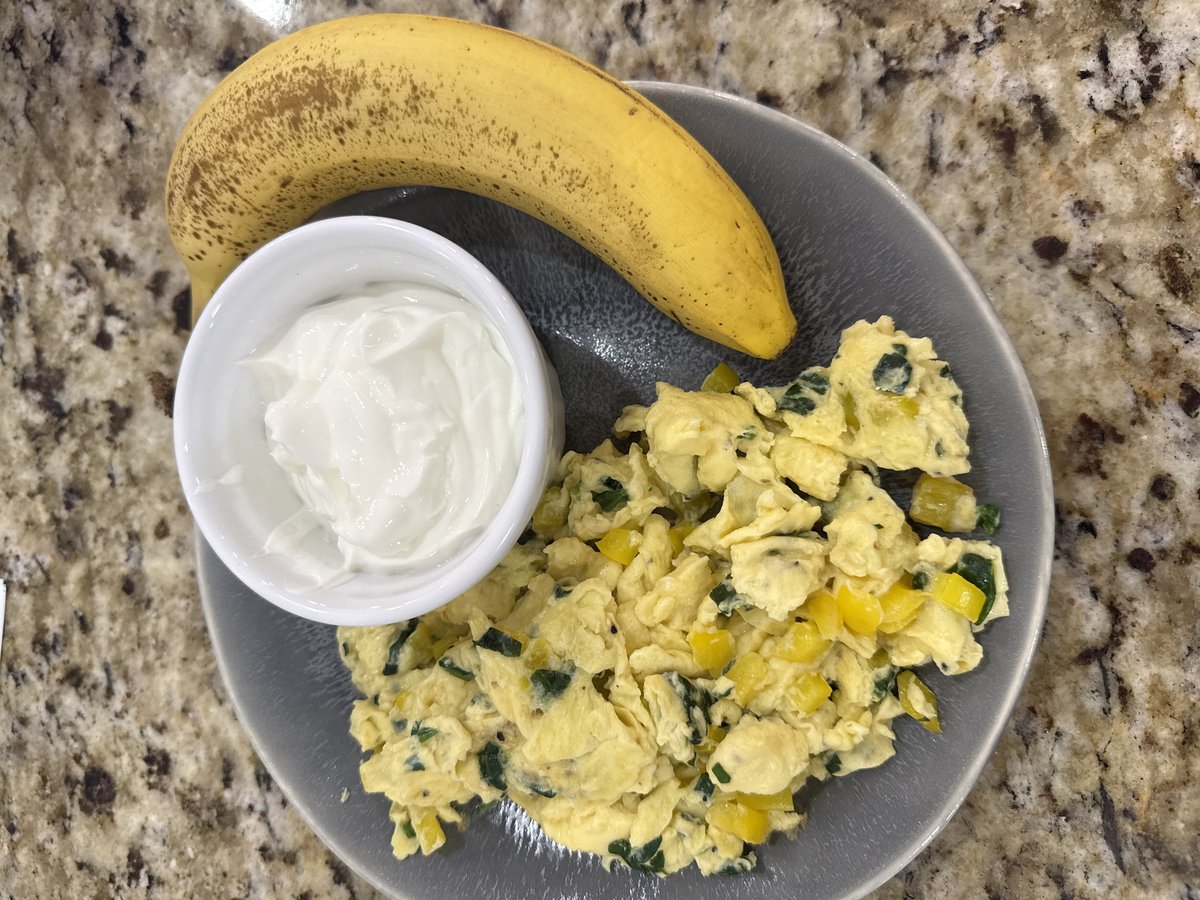
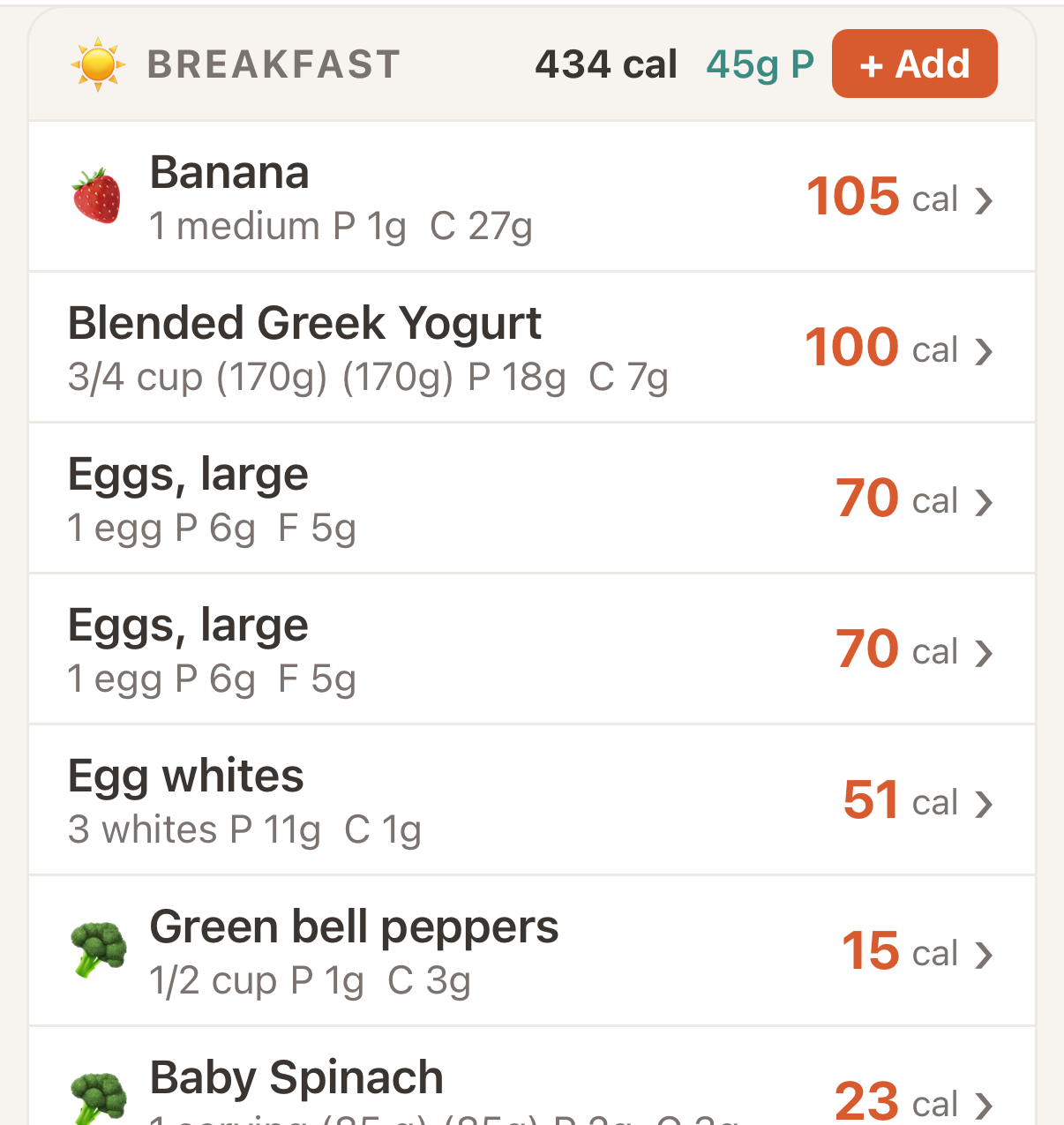
45 grams before 10am. A big breakfast means I’m not panicking at dinner.
Lunch, 1:15pm
37g proteinTuna and egg salad: a can of tuna, 2 chopped eggs, a tablespoon of mayo. Crackers for scooping. On the side, mixed greens with olive oil and balsamic, and the berries went both places: a cup on their own and a handful straight into the salad.
- Canned tuna, drained 20g
- 2 eggs + 1 tbsp mayo 12g
- Mixed greens salad, 2 cups veg 2g
- Blueberries & strawberries fruit 2g
- Crackers, 5 1g
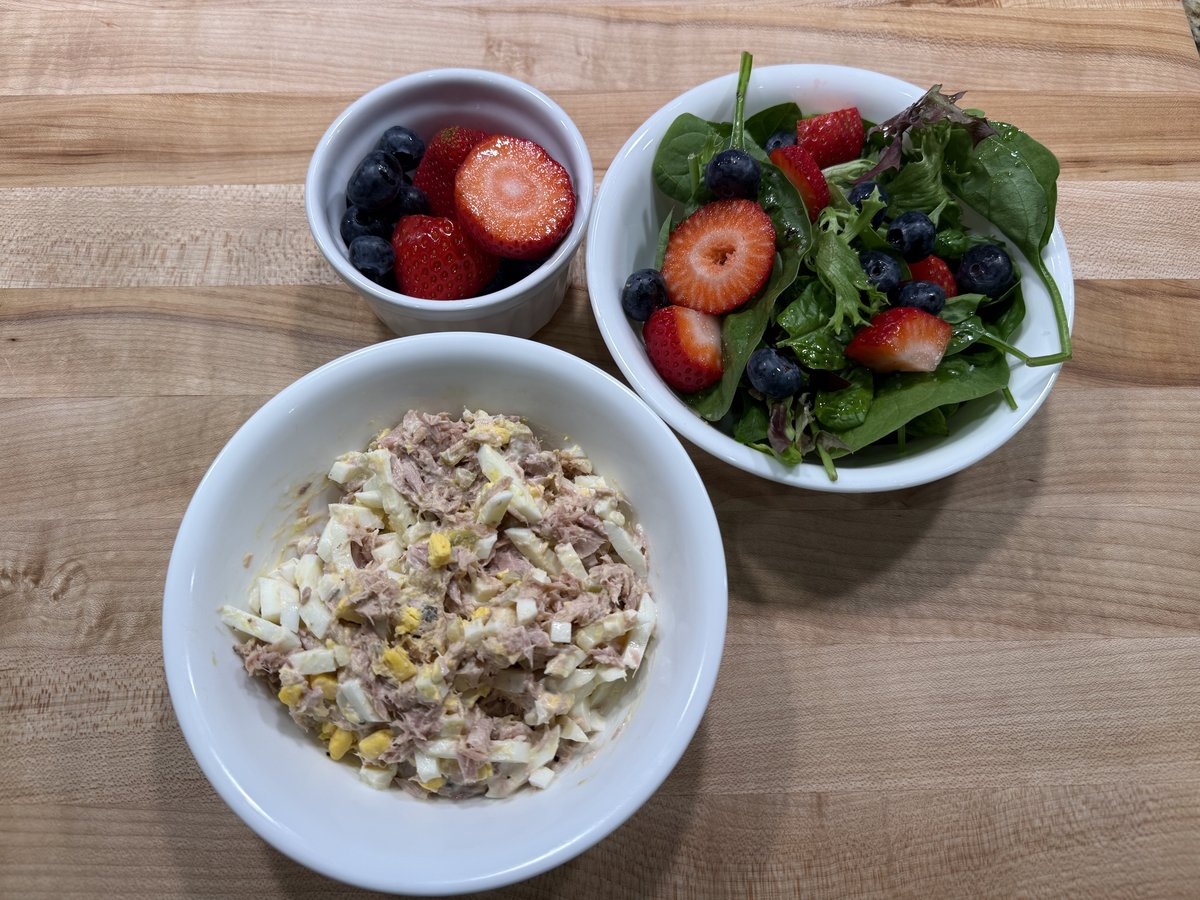
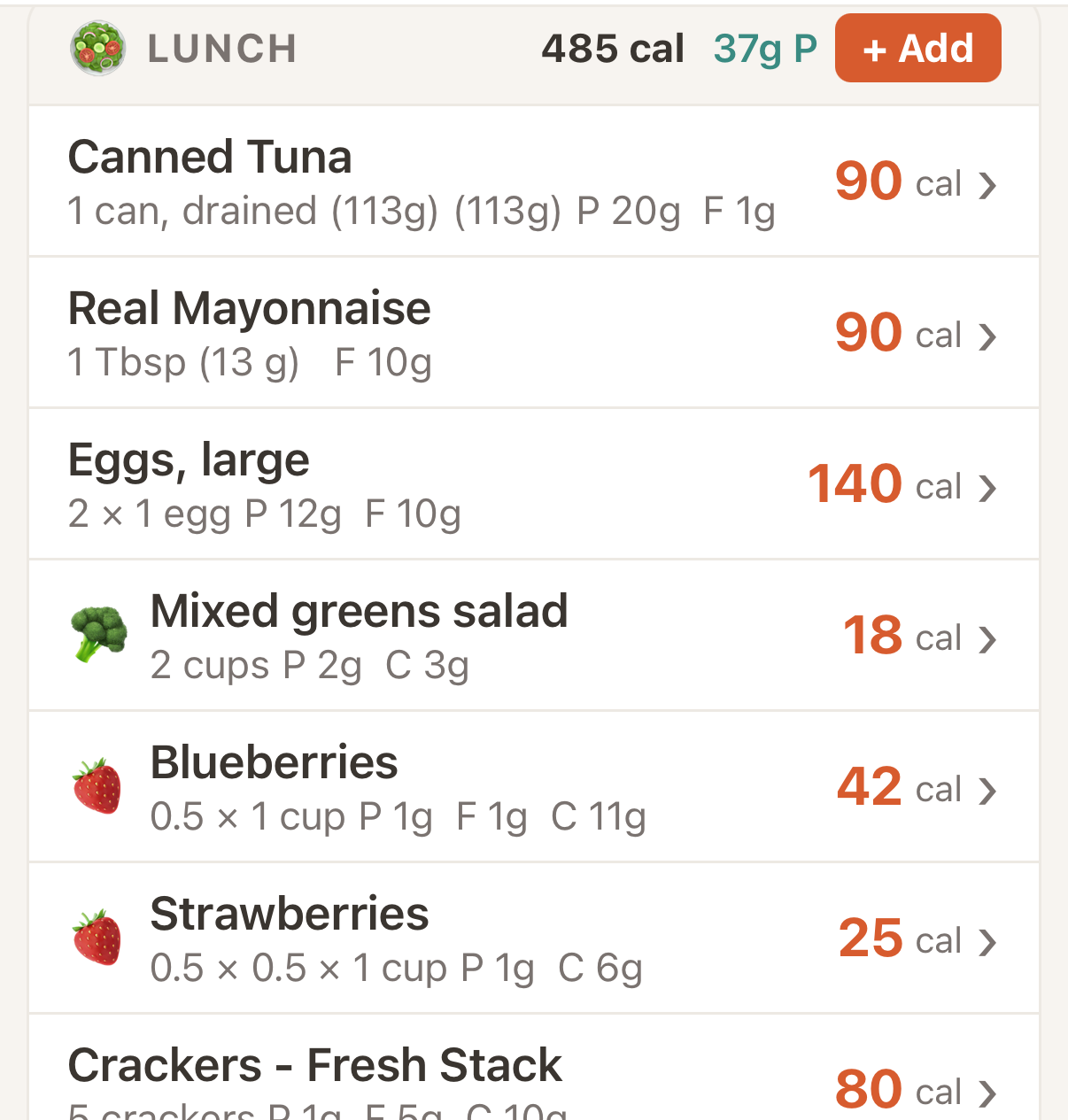
Both fruits and all 3 vegetables, done by lunch. Everything after this is extra credit.
“Pick one meal, one swap, let it get boring and then you add the next.”
Dinner, 6:00pm
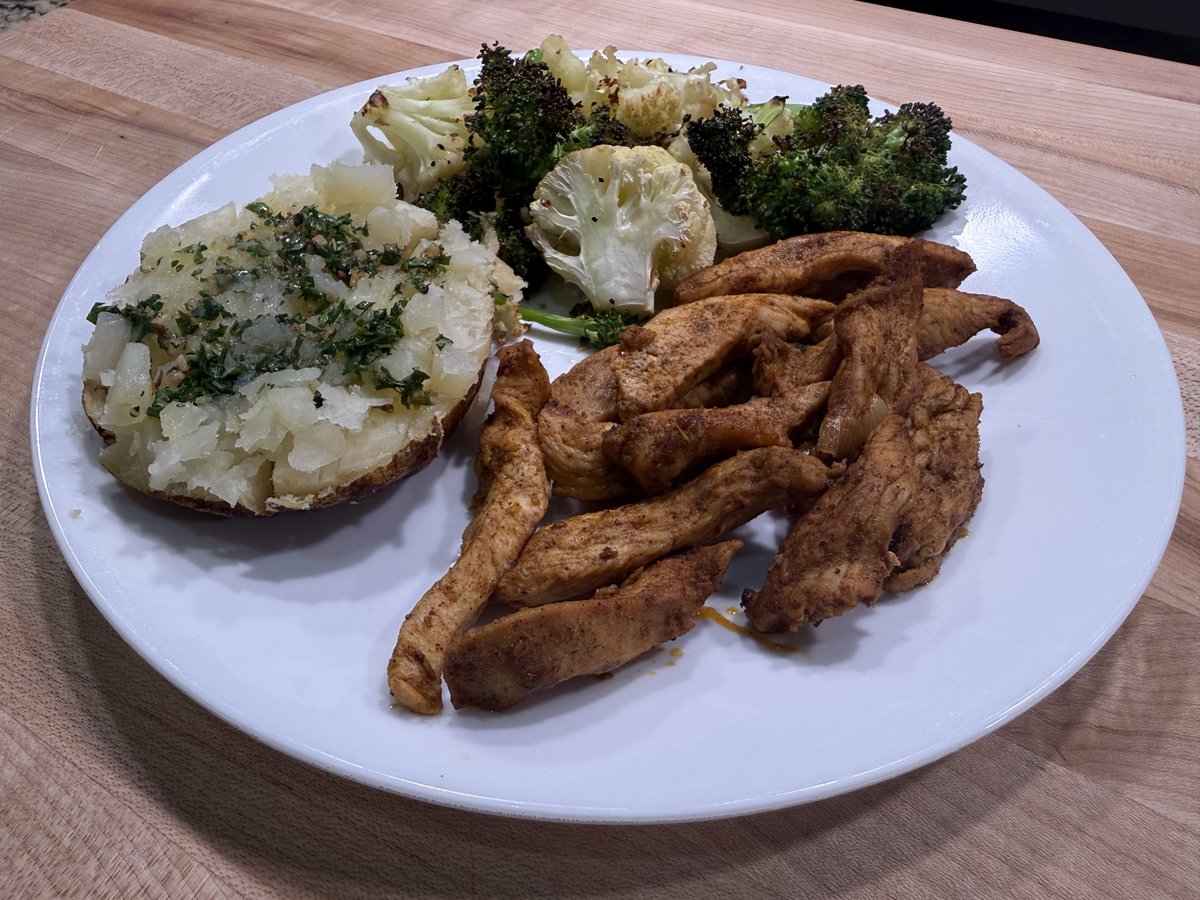
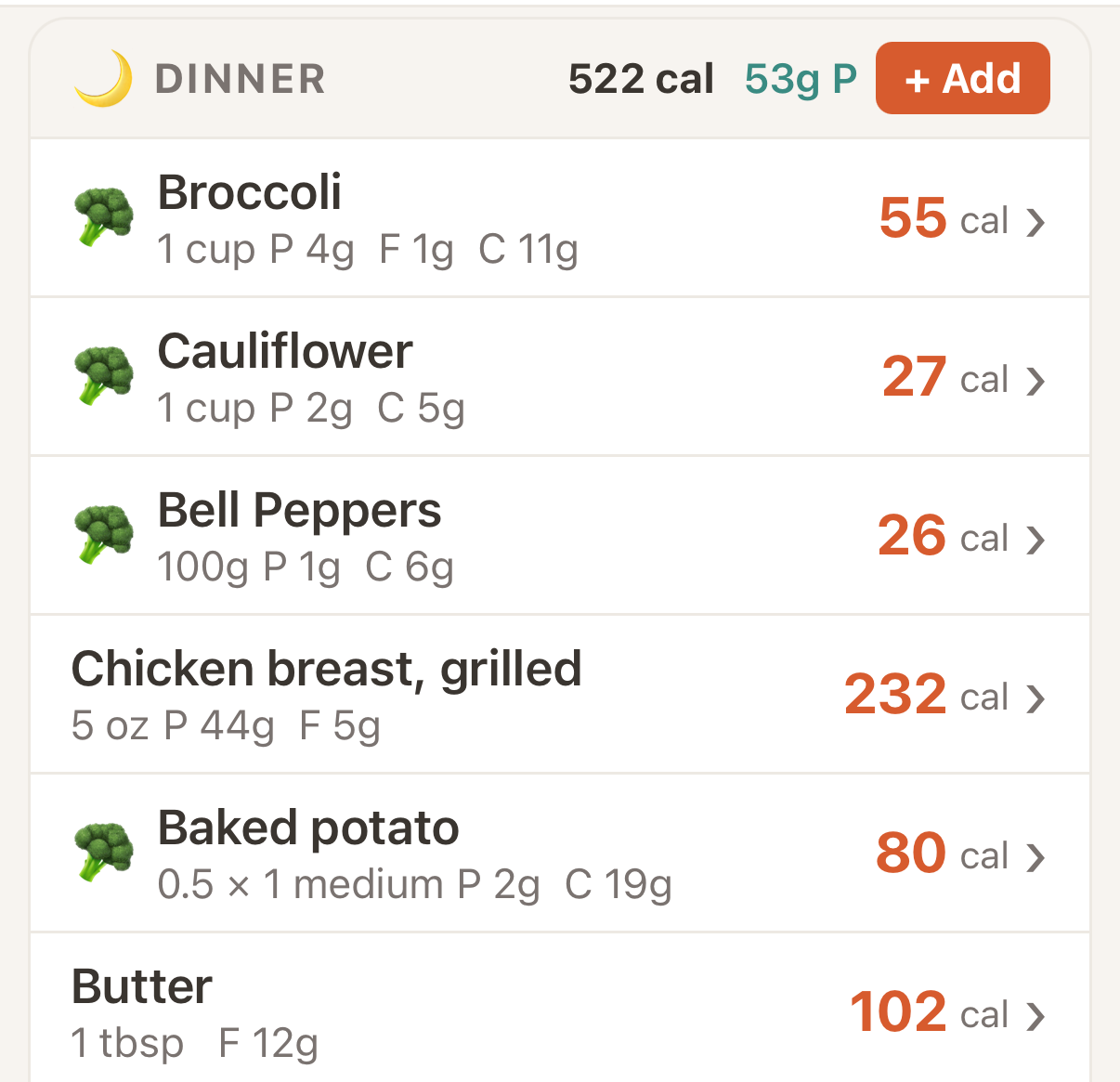
53g proteinGrilled chicken, half a baked potato with butter and herbs, and a sheet pan of roasted broccoli and cauliflower with bell peppers. Normal food, cooked at home.
- Chicken breast, grilled, 5 oz 44g
- Roasted broccoli & cauliflower, 2 cups veg 6g
- Bell peppers, 100g veg 1g
- Baked potato, 1/2 medium + butter 2g
Bonus: the snack bench
Some days the log comes up short. Protein’s stuck at 100, or a fruit never happened. These sit in my fridge for exactly that moment, washed and cut, because 8pm me does not prep.
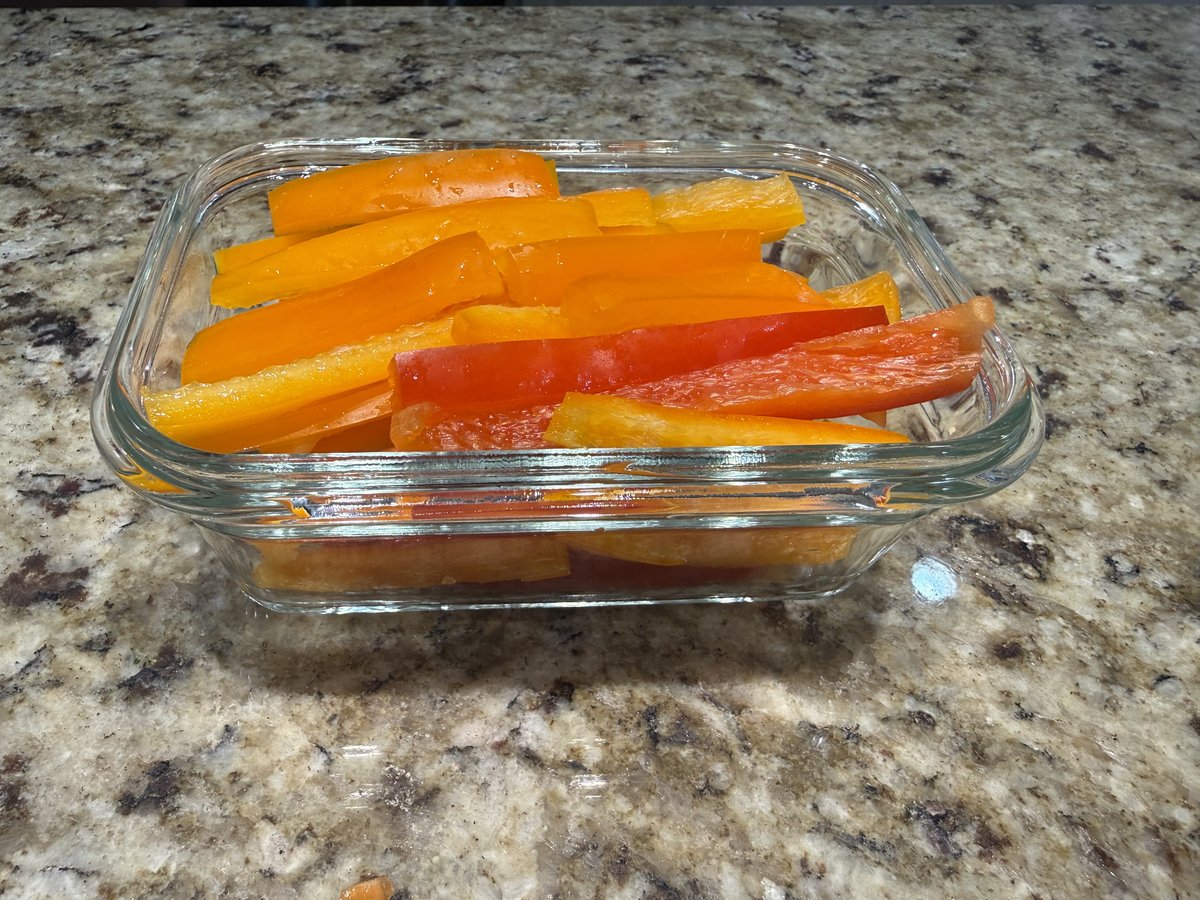
- Cut-up bell peppers. Crunchy, sweet, and they close a vegetable gap for about 15 calories.
- Oikos yogurt cups. 15 to 20g of protein each, depending on which one you grab. The single fastest fix for a short protein day.
- Grab fruit. An apple, a peach, a bowl of strawberries. If it’s visible and ready, it gets eaten. That’s the entire strategy.
The fridge is rigged
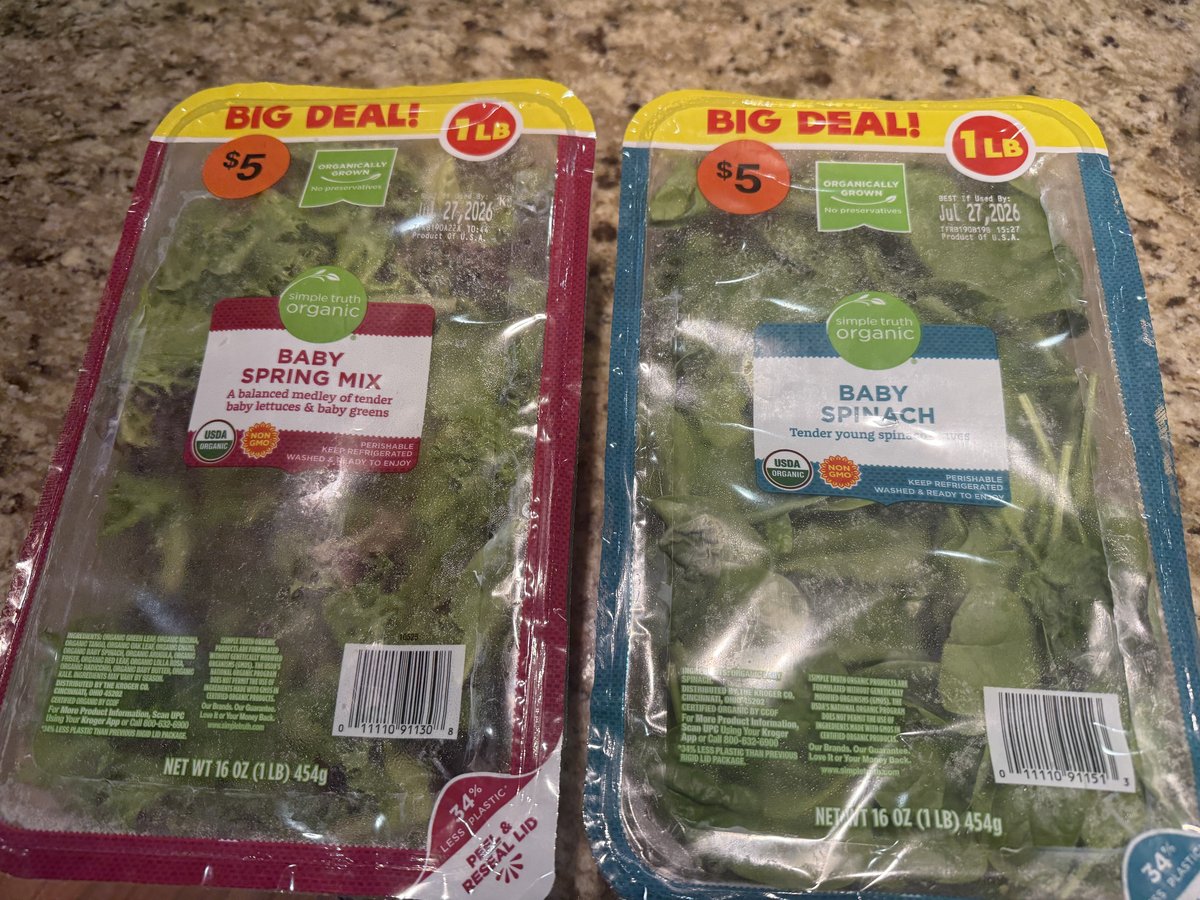
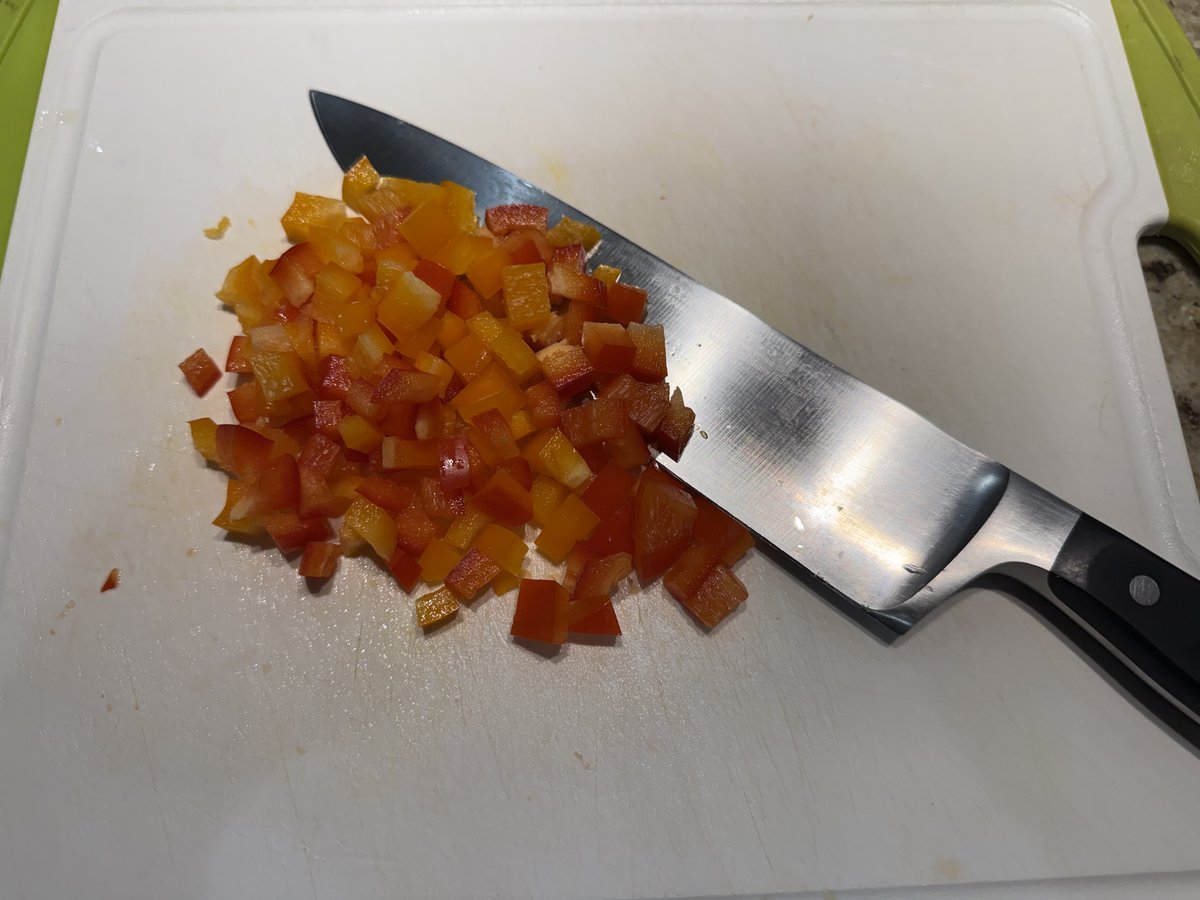
Everything above works because of 10 minutes of knife work on grocery day. Greens live in resealable tubs: one for salads, one that goes straight into the morning eggs. Peppers get cut the day they come home, sticks for snacking, diced for scrambles.
The easier something is to grab, the more often it gets eaten. That rule has never once failed me. It works in the other direction too, which is why the produce I leave whole tends to die in the drawer.
If yours keeps dying in there too, I wrote up how to store fruits and veggies so they last the week. And if you’re eyeing those tubs and wondering about the label, here’s whether organic is worth the extra money.
The pattern, if you want it
Every meal gets a protein anchor. Eggs and Greek yogurt at breakfast, tuna and eggs at lunch, chicken at dinner.
Produce rides along. Spinach cooks into the eggs, berries land on the salad, peppers roast next to the chicken. A fruit or vegetable that needs its own occasion tends to stay in the fridge.
Repeat yourself. This breakfast happens most days of my week. Deciding once beats deciding daily.
Why these numbers?
The protein rule: 1 gram per pound of maintenance weight. My maintenance weight is 135 pounds, so 135 grams. The math stays that simple on purpose.
Here’s the science under it. Muscle gain from lifting plateaus around 1.6 grams per kilo of bodyweight a day, and the upper confidence bound lands near 2.2 g/kg, which is 1 gram per pound.1 Eating at the top of that range costs you nothing and covers the stretches when you’re in a calorie deficit, because that’s when protein needs climb. In a 4-week trial of men training hard on 40% fewer calories, the group eating 2.4 g/kg gained 1.2 kg of lean mass while losing more fat than the group at half that protein.2 Recommendations for lifters dieting to stay lean run 2.3 to 3.1 g/kg of lean mass.3
Pinning the number to maintenance weight instead of current weight is what makes the rule usable whatever the scale says: it scales the target to the body you’re keeping rather than inflating it. And the appetite side matters as much as the muscle side. Higher-protein diets, with 25 to 30 grams at each meal, improve satiety and weight management.4
The ranges in these studies differ because the people in them differ. One gram per pound of maintenance weight lands inside all of them, and it’s arithmetic you can do in your head at the grocery store.
The produce rule has even bigger data behind it. In two cohorts followed for 30 years plus a meta-analysis covering nearly 2 million adults, mortality risk bottomed out at exactly 2 servings of fruit and 3 servings of vegetables a day.5 Eating more than that didn’t add years. So 2 and 3 it is, most days, attached to meals I was eating anyway.
If you want the longer argument for food over powder, I’ve made it here: Protein powder vs. whole food.
References
- Morton RW, et al. A systematic review, meta-analysis and meta-regression of the effect of protein supplementation on resistance training-induced gains in muscle mass and strength in healthy adults. British Journal of Sports Medicine. 2018. pubmed.ncbi.nlm.nih.gov/28698222
- Longland TM, et al. Higher compared with lower dietary protein during an energy deficit combined with intense exercise promotes greater lean mass gain and fat mass loss: a randomized trial. American Journal of Clinical Nutrition. 2016. ajcn.nutrition.org
- Helms ER, Aragon AA, Fitschen PJ. Evidence-based recommendations for natural bodybuilding contest preparation: nutrition and supplementation. Journal of the International Society of Sports Nutrition. 2014. pubmed.ncbi.nlm.nih.gov/24864135
- Leidy HJ, et al. The role of protein in weight loss and maintenance. American Journal of Clinical Nutrition. 2015. ajcn.nutrition.org
- Wang DD, et al. Fruit and Vegetable Intake and Mortality: Results From 2 Prospective Cohort Studies of US Men and Women and a Meta-Analysis of 26 Cohort Studies. Circulation. 2021. ahajournals.org
Want the lesson that goes with this?
This page pairs with the protein lesson in the Wellness AF app, where you set your own target and the food log does the counting.
Open the lesson